Understanding Runway Incursion Categories
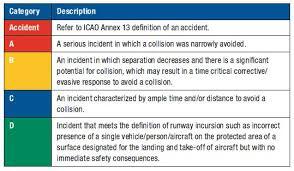
Understanding runway incursions is essential for safety managers dedicated to upholding safety standards in aviation operations. The International Civil Aviation Organization (ICAO) categorizes these incursions into distinct types, illuminating the nuances and underlying factors associated with these potentially hazardous events.
Runway incursions are classified as Type A, B, C, and D. Type A incursions signify serious situations where a collision is imminent, representing the highest level of urgency. These events pose significant safety risks and require immediate corrective actions along with thorough incident investigations.
Type B incursions still carry considerable risk, even though a collision is not immediately imminent. These situations demand vigilant monitoring, as they can escalate if neglected. By understanding the specific dynamics of Type B incursions, safety managers can devise proactive measures to effectively prevent escalation.
Type C incursions involve less immediate threat, characterized by unauthorized movements that do not directly conflict with another aircraft or vehicle. Though they may seem less serious, they act as critical indicators of potential gaps in training, communication, or procedural adherence. Safety managers can leverage this data to enhance training programs and adjust safety protocols accordingly.
Lastly, Type D incursions pose minimal safety concern but still warrant attention, as they can highlight procedural lapses or misunderstandings among personnel. Monitoring and analyzing these incursions can offer valuable insights into areas that require improvement in safety management systems.
By recognizing and addressing the distinctions among runway incursion classifications, safety managers can refine their operational protocols and enhance overall safety. Expertise in these classifications contributes significantly to developing and implementing an effective Safety Management System (SMS), fostering a culture of safety awareness and compliance across aviation operations. Ultimately, a comprehensive understanding of these classifications empowers safety managers to spearhead initiatives that protect crews, passengers, and aircraft alike.